A compliance platform for AI governance and risk management. Connect regulatory obligations to AI-enabled services, accountable owners, controls and evidence.
Work from the top down, starting with obligations and requirements, or from the bottom up, starting with service activity and metering. Give compliance, operations and technology teams a shared record for everyday risk decisions, including training completion and certification status.
24 questions · Immediate results · Downloadable PDF roadmap
The product workspace
One service flow. Shared governance context.
Liquid Learn’s AI governance software connects the service map to review work. Teams maintain the record as the service and its operating decisions change.
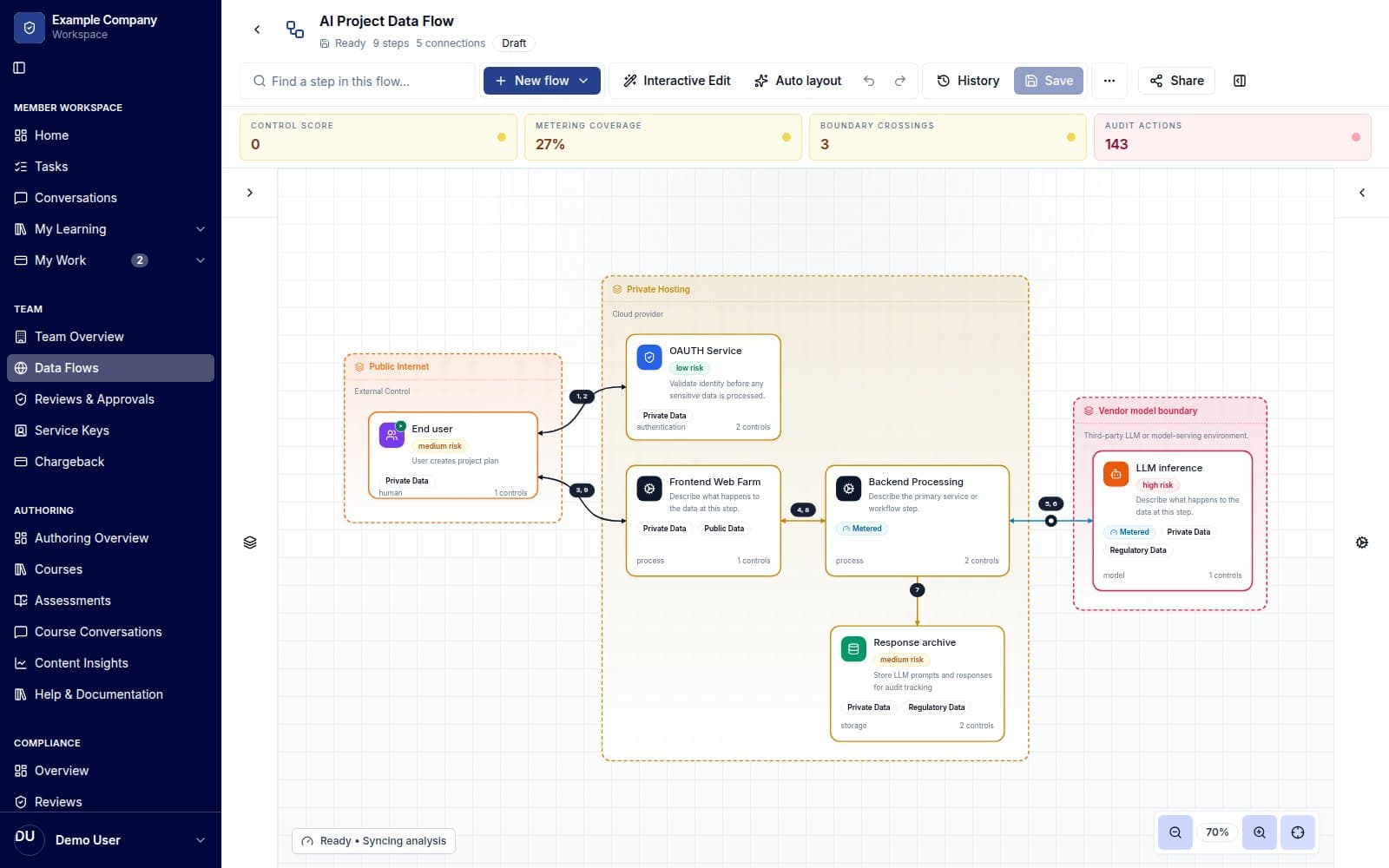
Service mapping · AI activity, data boundaries and control points in one operating view.
Track regulatory sources and obligations
Ingest configured regulatory sources, retain document and version context, and use automatic obligation extraction and profile-based requirement matching. Review applicability and maintain requirements with their source context.
Which obligations apply to this service, and who needs to review a change?
Map the service that uses AI
Put people, applications, AI steps, data stores and vendor boundaries in one service flow. Make the intended use and the information crossing each boundary clear.
What changes when a new model or vendor enters the service?
Make ownership and oversight visible
Identify owners at the steps they are responsible for. Show human review, approval and escalation alongside AI activity so teams can agree who intervenes and when.
Who can review an output, stop a handoff or take responsibility for an exception?
Track training across your team
Keep training progress and completion records visible for the people responsible for the work. Review learning gaps alongside the roles, oversight duties and operating procedures they support.
Who has completed the training, and where is follow-up needed?
Keep certification records in view
Track team certifications and their status in the same governance environment. Bring qualification records into the conversation when reviewing responsibilities and supporting evidence.
Which certifications are recorded, and what needs attention?
Connect controls to the work
Record controls and data classifications on service steps and connections. Use that context to discuss safeguards, review requirements and unresolved gaps.
Which control protects this data transfer, and who checks that it works?
Keep a reviewable service record
Bring evidence references into review packets and retain reviewed service snapshots with reviewer details and comments. Give the next review a clear starting point.
What was reviewed, against which service version, and what still needs evidence?
Bring metering into governance
Relate metered usage and cost allocation to the service, team or business unit responsible. Use recorded activity alongside the service model and evidence to inform risk reviews.
Does the recorded activity match the service your team is governing?
Illustrative service · Customer support assistant
Make the human decision part of the flow.
An assistant drafts a response using approved support material. A person reviews exceptions before a response is sent. This example shows how to document the service; it is not an automated workflow integration.
01 · Intake
Customer request
Record the information entering the service and the support team responsible for it.
Control to consider: limit sensitive data.
02 · AI activity
Draft a response
Show the knowledge source, model provider and information crossing the vendor boundary.
Evidence to consider: approved source and vendor instructions.
03 · Human oversight
Review or escalate
Name the reviewer and document when a request needs escalation to the service owner.
Evidence to consider: an exercised exception procedure.
04 · Service review
Record the decision
Connect the reviewed flow, controls and evidence references to the next operating review.
Decision to consider: what must change before wider use?
A practical review trigger
If the model provider changes, revisit the vendor boundary, data controls, human review instructions and supporting evidence. The service owner coordinates the decision; Liquid Learn keeps its context reviewable.
A shared view across teams
Govern the operating decisions together.
Compliance & risk
Review obligations, connect controls and evidence, and examine gaps in the service you are assessing.
Operations
Clarify handoffs, exceptions and who owns the outcome when AI supports service delivery.
Technology
Make systems, data movements, metering and external dependencies visible to reviewers.
Regulatory tracking depends on configured sources and your organizational profile; metering depends on instrumented activity. Your team confirms legal applicability, implements controls and validates evidence. Liquid Learn supports that governance process; it does not certify compliance or automatically enforce controls in third-party systems.
AI Governance & Regulations
Understand what the next review needs.
Practical guides with dated official sources, current legal status and clear product limitations.
Bring an AI-enabled service you need to govern. We can walk through its boundaries, owners, controls and review record together, including how you track your team’s training and certifications.
Enquiries are reviewed by Fluid Business in Seattle, Washington.